CambridgeCambridge A Level Chemistry (9701) · Equilibria, synthesis and quantitative explanationKnow the assessment →
AI Cambridge A Level Chemistry tutor · Mac & Windows

Sia Agent:Prepare for Cambridge A Level Chemistrywith Your Personal Tutor.

Build a focused Cambridge A Level Chemistry (9701) study plan, then work through moles, bonding, energetics, equilibria and organic reactions with live explanations and feedback on your handwritten working.

Download Sia Agent Mac & Windows · Sia Agent
Read the Exam Bible Read your exam study guide online
Your own materials Equilibria, synthesis and quantitative explanation Live Tutor explanations Mac & Windows
Sia Agent · product demo1:51 · narrated tour

Real Sia Agent footage: live tutoring, Test Prep and the study workspace. Screens show example exams and lessons.

Play the 1:51 product tour · sound on for the explanation
Make time for your next session
Your study time budget
Build your Cambridge A Level Chemistry study schedule

Adjust your time, not a promised score. Start with a plan you can fit around your classes.

Your study commitment
Make room for revision Keep the next task clear
60
7180
5
17
45
1590
Your revision budget
31.5
hours set aside for revision
60 days · 5 sessions / week · 45 minutes / session
42Sessions you can plan
3.75Hours per week
45Minutes for each session
This is a study-time calculation, not a score forecast. Use the first session to review a recent attempt and choose one skill to revisit.
Start with one focused task
Use Sia Agent for explanations and study planning. Check the current Agent catalog and access details when you start.
Cambridge A Level Chemistry (9701) at a glance Last reviewed

Cambridge A Level Chemistry (9701) is a Cambridge International qualification. Start by matching your examination year, level and component route to the syllabus before you choose revision material. The full A Level includes AS material plus additional theory and planning, analysis and evaluation of practical work.

Cambridge
Exam / qualification family
A
Check your exact level and syllabus
Written papers; components depend on entry
Assessment format
Theory and applied/practical components
Assessment components
2026–2027
Use the timetable for your entry
Your centre
Confirm registration and venue

Confirm your staged or linear entry and practical arrangements with your centre. Official examination information and the current syllabus take priority. AskSia is an independent study tool.

Choose what to work on

Cambridge A Level Chemistry revision starts with the task you find difficult.

At full A Level, the chain between an observation and a chemical conclusion matters. Distinguish evidence for a reaction pathway from a mechanism you have only assumed.

First: understand the demand
Current syllabus and level
Knowwhat the task requires
Equilibria, synthesis and quantitative explanationMoles, bonding, energetics, equilibria and organic reactions
a rate-equation answer that copies coefficients from the overall reactionUse the experimental rate changes to infer each order and explain why the balanced equation alone does not establish them.
Then: test your understanding
Independent practice and review
Applythe method yourself
Check the scopeThe full A Level includes AS material plus additional theory and planning, analysis and evaluation of practical work.Review
Read the commandRevise longer chains of reasoning alongside the earlier multiple-choice and structured skills.Review
Explain the methodUse the experimental rate changes to infer each order and explain why the balanced equation alone does not establish them.Review
Use evidenceAt full A Level, the chain between an observation and a chemical conclusion matters. Distinguish evidence for a reaction pathway from a mechanism you have only assumed.Review
Review the attemptKeep your own attempted answer with the correction.Review
Try againCheck whether you can explain the next example without help.Review
These are study priorities and examples, not published assessment weightings. Use your own syllabus, paper requirements and recent attempts to decide where to spend the next session.

How Sia Agent fits your revision

Bring a question. Work through it. Try the next one.

Choose this exam and level in Sia Agent, set your target and time remaining, and use the study plan to organise your next session.

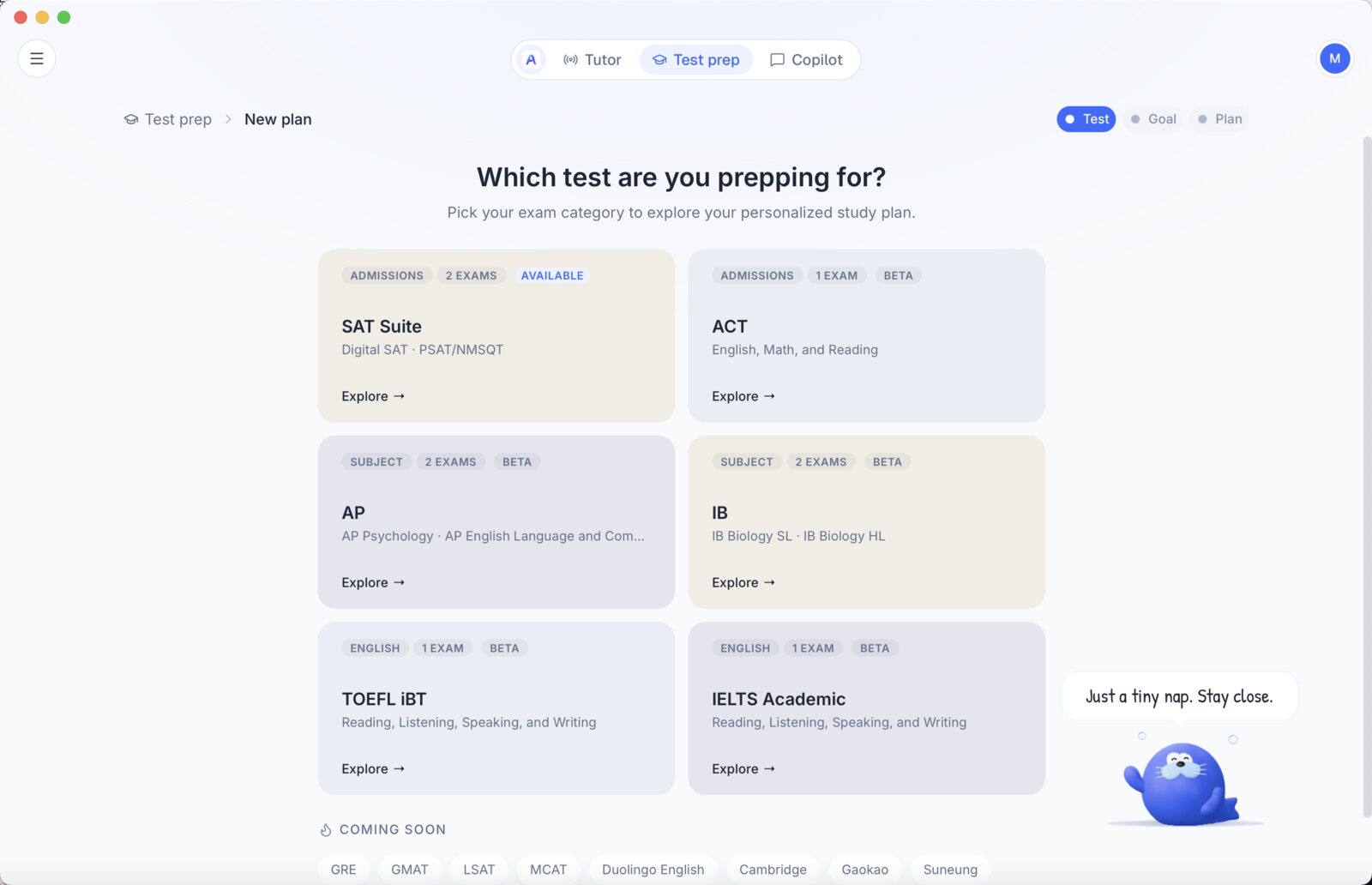
Real Sia Agent Test Prep interface: choose an exam
Actual Sia Agent screen · choosing a Test Prep exam.
Step 1

Match your course and target

Sia Agent supports 30+ tests, with study plans built around your exam and target. Choose this exam and level in Sia Agent, set your target and time remaining, and use the study plan to organise your next session.

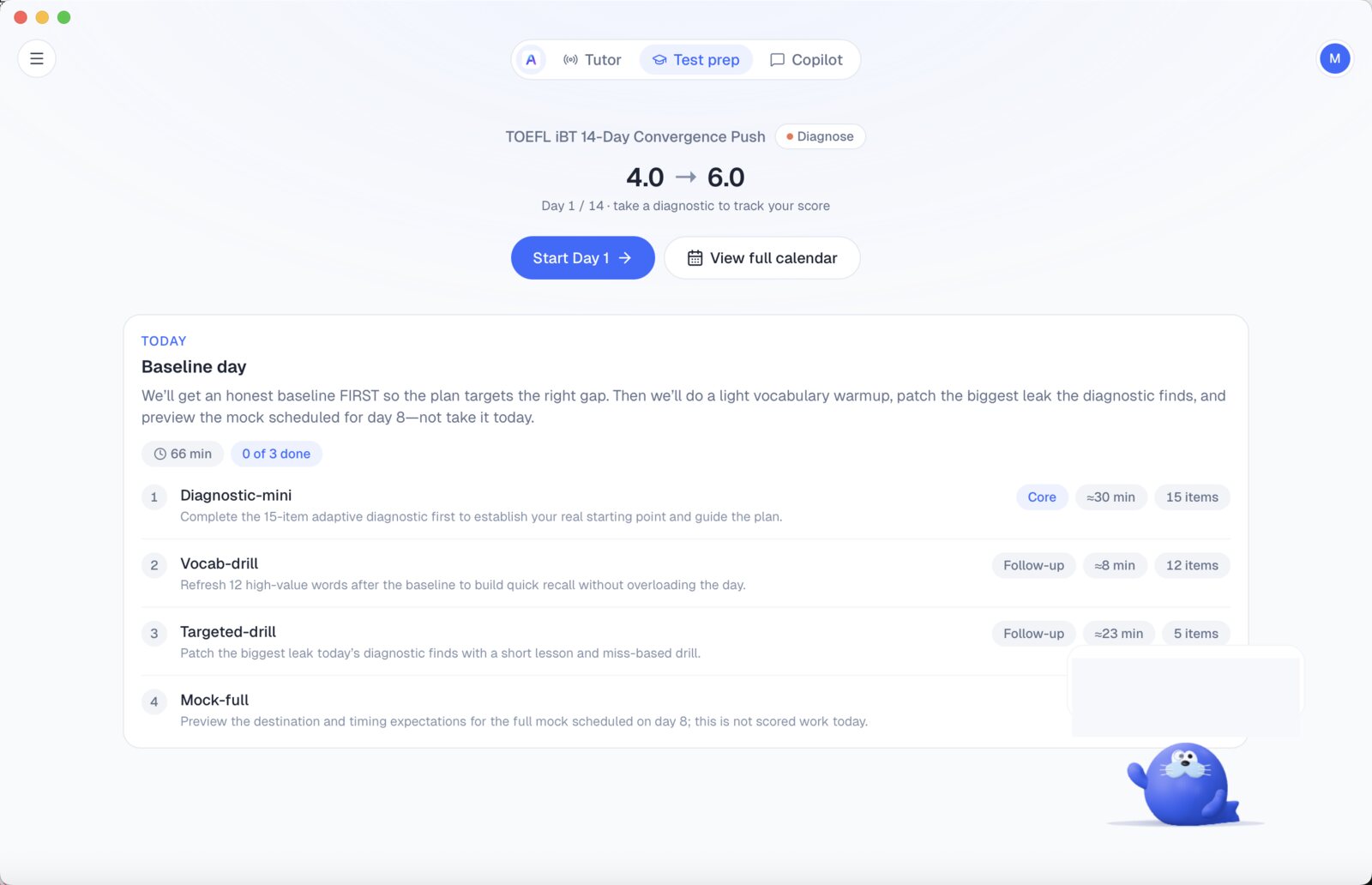
Real Sia Agent Test Prep interface: day-by-day study plan and practice tasks
Actual Sia Agent screen · a day-by-day Test Prep plan.
Step 2

Work through the difficult part

Use the experimental rate changes to infer each order and explain why the balanced equation alone does not establish them.

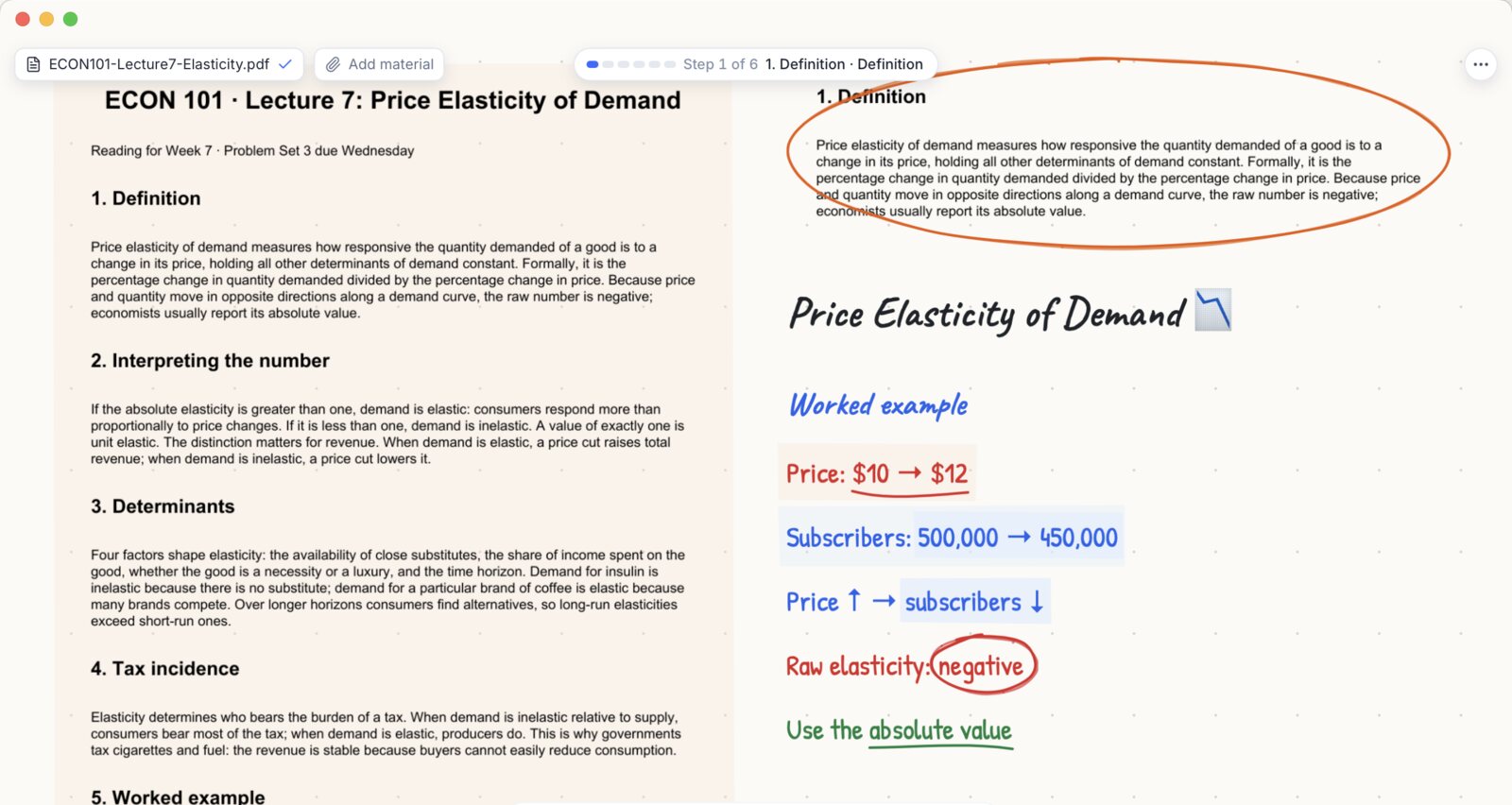
Real Sia Agent Live Tutor interface: course material beside the live whiteboard
Actual Sia Agent screen · a live whiteboard lesson.
Step 3

Practise the reasoning again

Start with a rate-equation answer that copies coefficients from the overall reaction. After discussing it, attempt another example independently.

Keep the learning loop concrete
  • Attempt a task before asking for the explanation.
  • Identify the first step you cannot justify.
  • Try a new task and compare your reasoning.
Know the assessment

Cambridge A Level Chemistry needs the right kind of practice.

The full A Level includes AS material plus additional theory and planning, analysis and evaluation of practical work.

Equilibria, synthesis and quantitative explanation

At full A Level, the chain between an observation and a chemical conclusion matters. Distinguish evidence for a reaction pathway from a mechanism you have only assumed.

Match the paper requirements

Revise longer chains of reasoning alongside the earlier multiple-choice and structured skills.

Practise independently

Confirm your staged or linear entry and practical arrangements with your centre.

Use the current assessment framework. Tutoring feedback is a study aid, not an official grade.
A revision example

Look at the reasoning, one step at a time.

Use the experimental rate changes to infer each order and explain why the balanced equation alone does not establish them.

Illustrative learning scenario

Doubling [A] at fixed [B] makes the initial rate four times larger. Doubling [B] at fixed [A] doubles the rate. Find the rate-law orders.

Try the task before opening the explanation. Then compare each step with your own reasoning.

Original teaching scenario by AskSia. This is not an official examination question or an official marked answer.

1Compare one variable at a time
Use experiments where only [A] changes to establish its order, and a separate comparison for [B].
Identify what the task asks before choosing a method.
2Determine the order in A
2^m = 4, so m = 2.
Check this step against the quantities or evidence given.
3Determine the order in B
2^n = 2, so n = 1. The rate law is rate = k[A]²[B].
Keep the calculation or explanation tied to the task.
4State what the evidence establishes
The overall order is three. These orders come from the experimental rates, not from copying coefficients in the balanced reaction.
Try another example without looking at this explanation.
Built around your study goal

Your exam, planned to the day.

Choose your exam and target, then follow your study plan and discuss difficult steps with Sia Agent.

Real Sia Agent Test Prep interface: choose an exam
Actual Sia Agent screen · choosing a Test Prep exam.
A specific starting point

Start with the right exam mode

Choose this exam and level in Sia Agent, set your target and time remaining, and use the study plan to organise your next session.

  • Equilibria, synthesis and quantitative explanation
  • Moles, bonding, energetics, equilibria and organic reactions
  • Review your attempt before the next task
Real Sia Agent Test Prep interface: day-by-day study plan and practice tasks
Actual Sia Agent screen · a day-by-day Test Prep plan.
A concrete learning task

Work through equilibria, synthesis and quantitative explanation

Use the experimental rate changes to infer each order and explain why the balanced equation alone does not establish them.

  • Equilibria, synthesis and quantitative explanation
  • Moles, bonding, energetics, equilibria and organic reactions
  • Review your attempt before the next task
Real Sia Agent Live Tutor interface: course material beside the live whiteboard
Actual Sia Agent screen · a live whiteboard lesson.
A conversation about your reasoning

Check my working

Upload a clear photo of your handwritten solution. Sia highlights a step to review and can explain it on the whiteboard.

  • Equilibria, synthesis and quantitative explanation
  • Moles, bonding, energetics, equilibria and organic reactions
  • Review your attempt before the next task
Cambridge A Level Chemistry practice

Practise the method you want to use in the exam.

At full A Level, the chain between an observation and a chemical conclusion matters. Distinguish evidence for a reaction pathway from a mechanism you have only assumed.

Start

Start with the right exam mode

Choose this exam and level in Sia Agent, set your target and time remaining, and use the study plan to organise your next session.

Explain

Work through equilibria, synthesis and quantitative explanation

Use the experimental rate changes to infer each order and explain why the balanced equation alone does not establish them.

Discuss

Check my working

Upload a clear photo of your handwritten solution. Sia highlights a step to review and can explain it on the whiteboard.

Revisit

Make the next session specific

After reviewing the error, attempt another question on moles. Keep the question, your attempt and the correction together so the next session starts from what you actually missed.

1 · Attempt the task→2 · Discuss the reasoning→3 · Explain the correction→4 · Try again yourself
Why AskSia

Make revision a series of tasks you can finish.

Equilibria, synthesis and quantitative explanation improves through focused practice, explanations and another attempt.

A concrete goal

Choose this exam and level in Sia Agent, set your target and time remaining, and use the study plan to organise your next session.

Choose a starting point

A problem worth discussing

a rate-equation answer that copies coefficients from the overall reaction.

Show your attempt

Explain the step

Use the experimental rate changes to infer each order and explain why the balanced equation alone does not establish them.

Ask a follow-up

Your next attempt

Use the correction to attempt a fresh task. Review the reasoning you still cannot explain, then decide what to practise next.

Check what changed
Study on your desktop

Keep the question and the explanation in one workspace.

Use Sia Agent on Mac or Windows for Cambridge A Level Chemistry revision with your own questions, screenshots and course material.

Bring the full question

Include the diagram, table or instructions as well as your answer so the explanation has the context it needs.

Use your course material

Moles, bonding, energetics, equilibria and organic reactions. Match every explanation to your examination-year syllabus.

Talk through the step

Use the experimental rate changes to infer each order and explain why the balanced equation alone does not establish them.

Return to independent work

After the discussion, close the explanation and attempt another task. Keep what you still need to revisit for the next session.

Mac & Windows · current access and system requirements on the Agent page
A familiar study companion

Use the same learning loop across your coursework.

Cambridge A Level Chemistry is one context for working with the study material and questions you already have.

Your notes
Start from course material
Your attempt
Show the reasoning
Your next task
Use the explanation in practice
STUDY SCENARIO
Start with the right exam mode

Choose this exam and level in Sia Agent, set your target and time remaining, and use the study plan to organise your next session.

1
Cambridge A Level Chemistry
Illustrative learning workflow
STUDY SCENARIO
Work through equilibria, synthesis and quantitative explanation

Use the experimental rate changes to infer each order and explain why the balanced equation alone does not establish them.

2
Cambridge A Level Chemistry
Illustrative learning workflow
STUDY SCENARIO
Check my working

Upload a clear photo of your handwritten solution. Sia highlights a step to review and can explain it on the whiteboard.

3
Cambridge A Level Chemistry
Illustrative learning workflow
STUDY SCENARIO
Make the next session specific

After reviewing the error, attempt another question on moles. Keep the question, your attempt and the correction together so the next session starts from what you actually missed.

4
Cambridge A Level Chemistry
Illustrative learning workflow
STUDY SCENARIO
Start with the right exam mode

Choose this exam and level in Sia Agent, set your target and time remaining, and use the study plan to organise your next session.

5
Cambridge A Level Chemistry
Illustrative learning workflow
STUDY SCENARIO
Work through equilibria, synthesis and quantitative explanation

Use the experimental rate changes to infer each order and explain why the balanced equation alone does not establish them.

6
Cambridge A Level Chemistry
Illustrative learning workflow

These cards illustrate learning workflows. They are not testimonials, exam results or promises of a score increase.

Use the right source for the job

Keep official information and study support connected.

Registration and official results belong to the examining body. Use your course material and tutoring for preparation.

Cambridge A Level Chemistry preparation roles
TaskSia AgentExam providerYour own practiceTeacher / school
Understand a difficult stepDiscuss and ask questionsPublished guidanceAttempt the methodCourse-specific feedback
Choose revision tasksStudy supportAssessment requirementsRecent mistakesCourse priorities
Confirm registrationCheck provider rulesAuthoritative sourceKeep entry detailsSchool arrangements
Know the paper formatDiscuss your materialsCurrent specificationPractise the tasksConfirm your entry
Review an attempted answerLearning feedbackOfficial mark scheme, if availableRedo independentlyAssessment guidance
Read official resultsUse results for revisionOfficial releaseReflect on gapsAccess instructions
Agree access / feesCurrent Agent detailsExamination feesYour time budgetSchool charges, if applicable
Prepare for another sessionExplain and revisitExam informationBring a fresh attemptUse feedback

This table describes preparation roles, not a comparison of unverified competitor prices or product features.

Exam arrangements

Cambridge A Level Chemistry (9701) dates, entry and results.

Confirm your staged or linear entry and practical arrangements with your centre.

June 2027
June series
November 2027
November series
Written papers
Assessment format
A
Confirm exact subject / level

June series — 2027; paper dates vary by administrative zone — Your registered examination centre. November series — 2027; confirm available components — Your registered examination centre. Examination fees depend on your country, examination centre, components and entry arrangements. Ask your registered centre for a subject-specific quotation. Late-entry and retake charges may differ. Cambridge examination fees are separate from any AskSia plan. A Level grades run from A* to E; U is ungraded. Check your official candidate account or school instructions for final arrangements.

Checked 3 November 2026 · confirm the current provider timetable and your admission notice
Reach your goal

Make your next revision session count.

Use the experimental rate changes to infer each order and explain why the balanced equation alone does not establish them.

  • 1Choose one task from Cambridge A Level Chemistry.
  • 2Bring your own attempted answer and question.
  • 3Use the explanation in another attempt.
One step at a time
Understand the method
Equilibria, synthesis and quantitative explanation. Use your next independent attempt to check what you have learned.
Download Sia Agent Read the Exam Bible
Choose how to begin

Start from your materials or a supported exam mode.

Check current access and plan details on the Agent page. Examination entry fees are separate.

Your exam study guide
Read the Bible
Cambridge International AS & A Level Chemistry (9701): Complete Study Guide
  • Read the matching exam overview
  • Study the published sections and topics
  • Use worked examples as you revise
  • Keep your exam level and syllabus clear
  • Read the complete subject study guide
  • Continue with your own practice
Read the Exam Bible
Exam-specific plans
Choose a mode
For exams currently listed inside Sia Agent
  • Cambridge A Level Chemistry is in the confirmed exam catalog
  • Choose the exact subject and level
  • Set a target and time remaining
  • Use the matching study plan
  • Verify access details before upgrading
Download Sia Agent

Agent and online account access have their own current plan details. Examination registration fees are separate.

Built responsibly

Learn the method. Check the source.

Use AI support as part of your preparation, alongside current assessment information and your teacher’s guidance.

Independent study support

AskSia is not the examining body and is not endorsed by it. Registration, permitted materials and official results remain with the provider.

Current exam information

Check the correct syllabus year, subject and level. This page was reviewed against the referenced official exam information on 3 November 2026.

Your own assessed work

Use explanations to improve your understanding. Write your own assessed submissions and follow your school’s academic integrity rules.

No promised score gain

The time planner on this page calculates study hours. It does not predict a grade or guarantee an examination outcome.

Frequently asked questions

Cambridge A Level Chemistry questions, answered.

Include the balanced equation, quantities and units in your upload. Ask Sia to check the conversion to moles before the reacting ratio, then redo the calculation without looking at the explanation.
Bring the question, your attempted answer and the syllabus or paper details. For example, start with a rate-equation answer that copies coefficients from the overall reaction. This gives Sia something concrete to explain instead of producing a general revision summary.
Choose this exam and level in Sia Agent, set your target and time remaining, and use the study plan to organise your next session.
Yes. This supported paper-answer subject can use Check my working: upload a clear photo, review the highlighted step and ask Sia to explain it on the whiteboard. Check the feedback against your question and method; it is study guidance, not official marking.
No. AskSia is an independent study tool, not the examining body, and is not endorsed by it. Check registration, permitted materials, results and final assessment rules with the official provider. Visit the Agent page for current access and plan details.

Your next step:
understand it with Sia.

Bring a rate-equation answer that copies coefficients from the overall reaction to your next study session.

Sia Agent · Mac & Windows · current access details on the Agent page