Skip to the subject list

21 University of Toronto course guides

University of Toronto Courses, Syllabus by Syllabus: Where the A+ Is Won

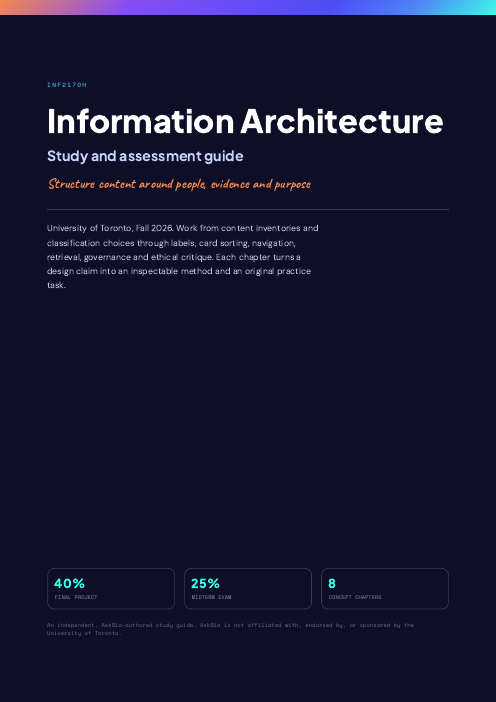
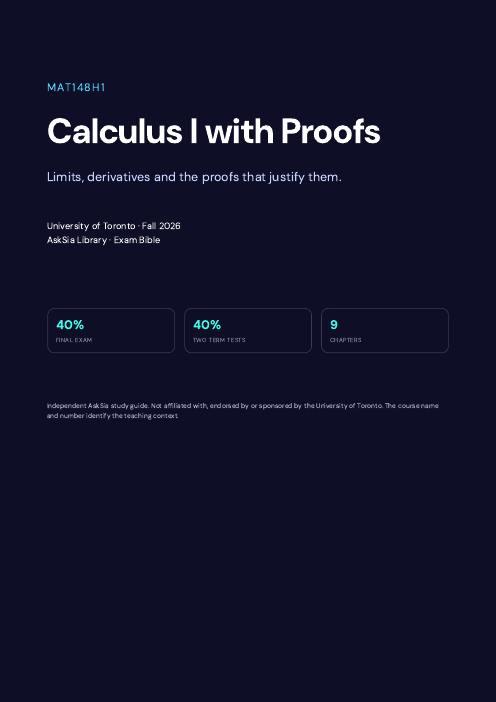
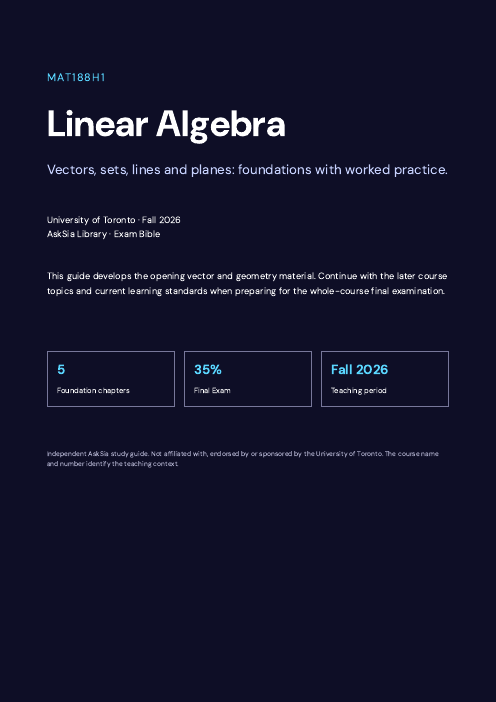
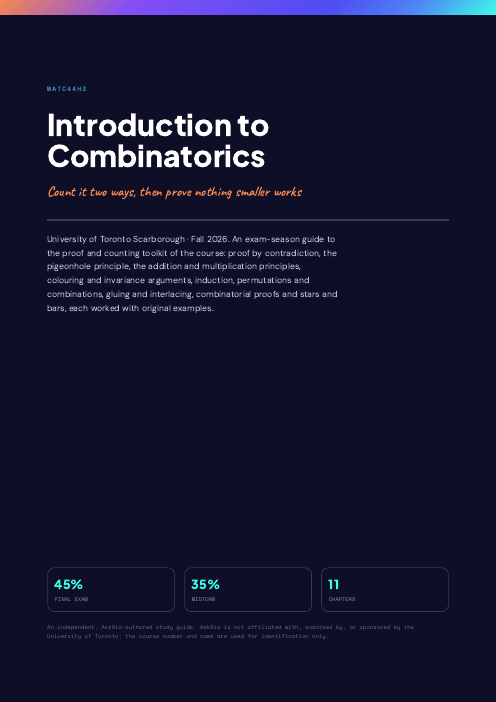
Shared materials and discussions organized by course. Every guide opens with the assessment table for that course.

reported better exam resultsby at least one grade
78%
understood the concepts betternot just memorised them
84%
less study time per sessionreported by 68% of students
~30%

Student Learning Outcomes Report 2026 · 800 students across six markets · self-reported · Read the research

  • It's the first time I actually understand how different chapters connect.I'm not just memorizing; I'm learning.Business student, University of Melbourne
  • I used to cram everything the night before.Now I review a little every day because it breaks things down in a way that sticks.Engineering student, UNSW Sydney
  • I used to spend 3 hours confused.Now I get through material in under 2 hours and actually understand it.STEM student, Rice University
184 chapter pages · 10 subject areas

Topics, worked examples and key terms carry across offerings. Assessment weights and dates change between offerings, so confirm yours on the LMS. Last updated 22 October 2026.

All 21 University of Toronto course guides

Grouped by discipline. These are AskSia topic categories, not University of Toronto faculties or departments.

Arts and Humanities6 courses

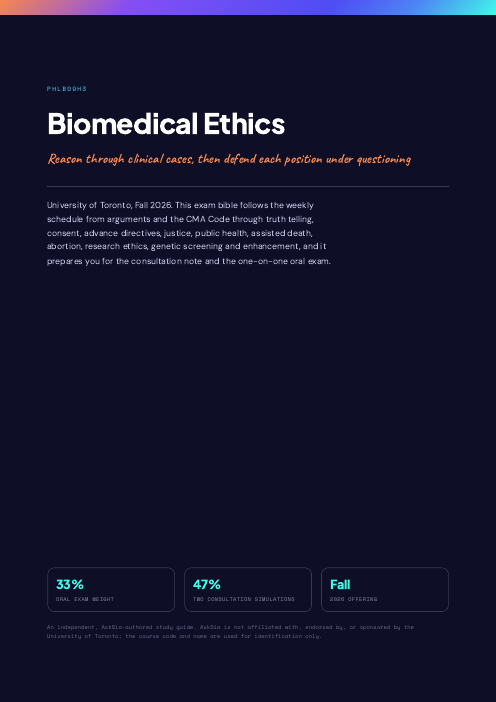
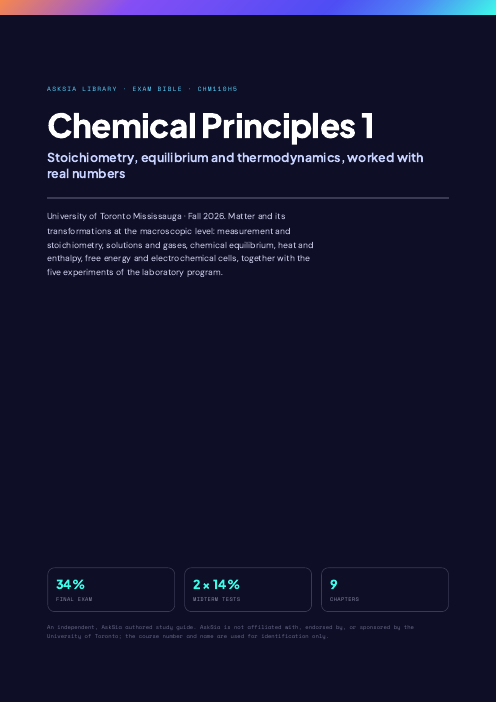
Chemistry1 course

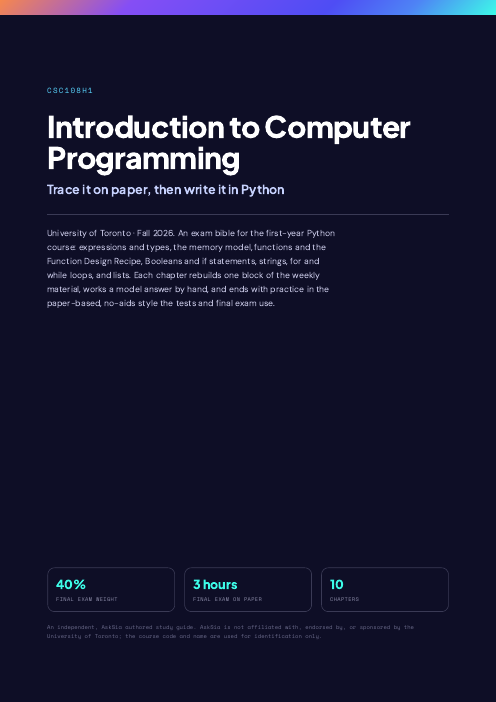
Computer Science1 course

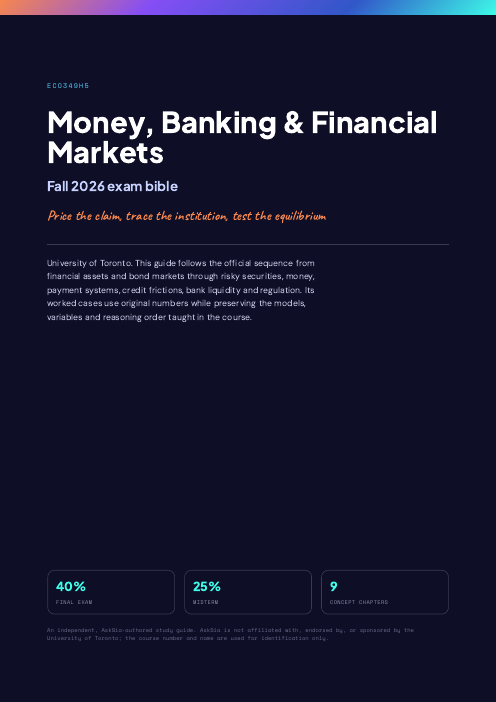
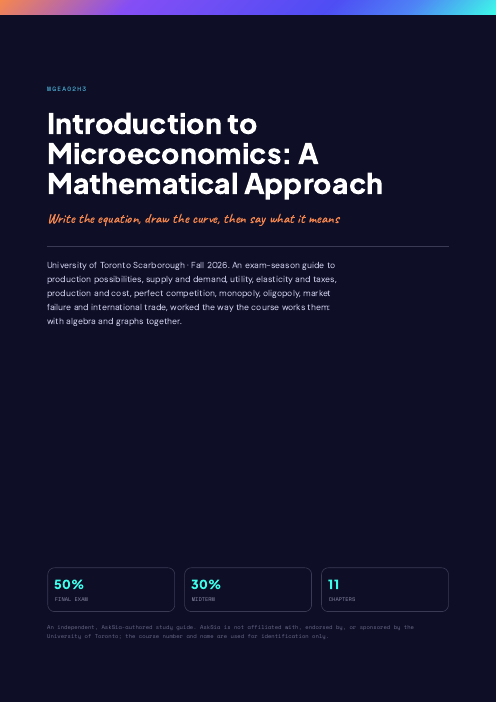
Economics3 courses

Engineering1 course

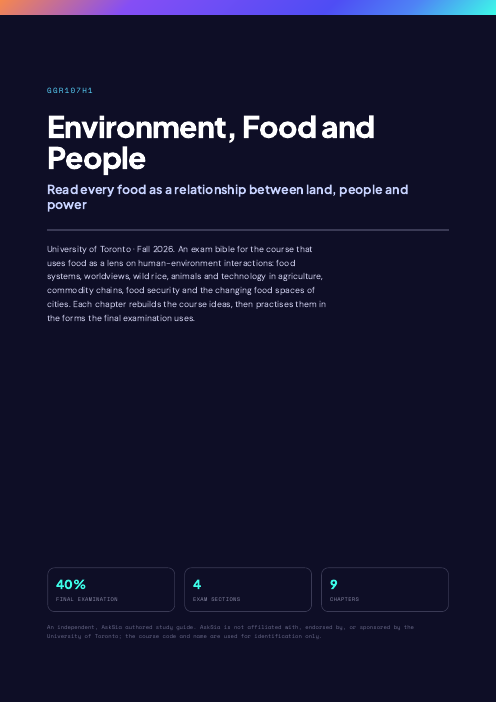
Environmental Science1 course

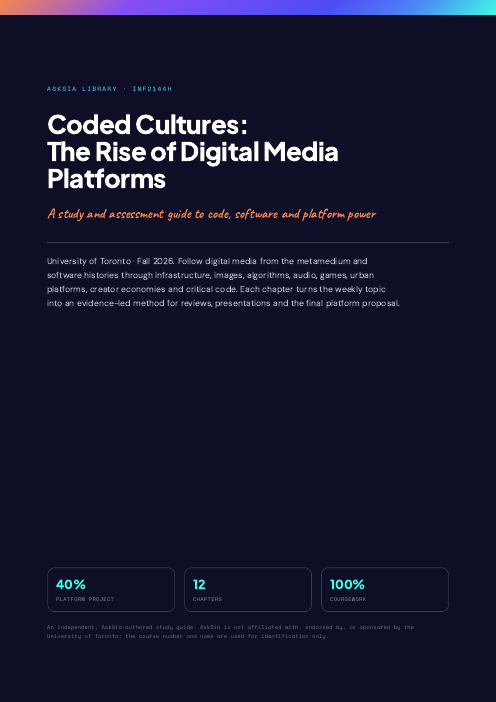
Information Technology2 courses

Mathematics3 courses

Psychology2 courses

Statistics1 course

How assessment works at University of Toronto

Where do the weights on these U of T guides come from?

From the course syllabus for the term the guide names, the document instructors post on Quercus in the first week. Each guide reproduces that assessment table, marks the components that make up the final exam period, and lists the syllabus file it was read from.

What mark is an A+ at U of T?

Ninety per cent and above. The University scale runs A+ 90 to 100, A 85 to 89, A minus 80 to 84, down to D minus at 50 to 52 and F below 50, and both A+ and A carry a grade point of 4.0. Guides state the weight of each component so you can see how much of that 90 sits in the final exam.

When is the final exam period, and where is the schedule?

Fall term courses are examined in the December final exam period, winter term courses in April. The Faculty of Arts and Science posts the schedule in ACORN in the last week of October or early November, exams can fall on evenings or weekends, and personal commitments booked inside the period are not grounds for a deferral.

What do H1 and H5 in a course code mean?

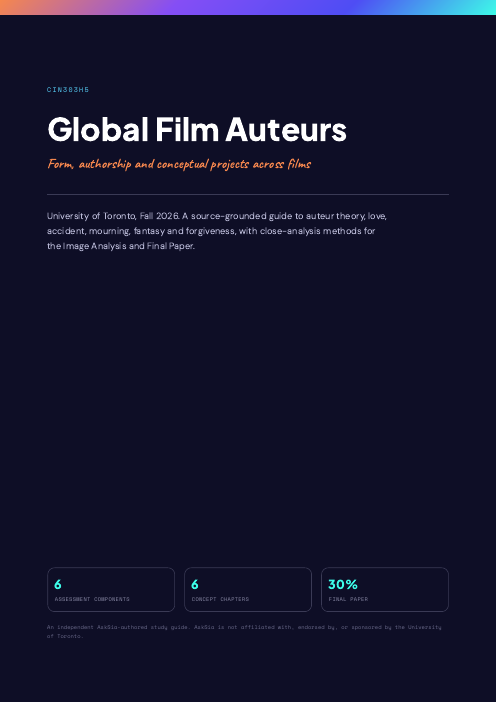
The campus. MAT188H1 is the St. George offering; ANT214H5 and CIN303H5 are taught at Mississauga. The letter after the code marks the term, F for fall and S for winter, and the H says the course is a half credit. Guides keep the full official code in the title so you can match it to your own timetable.

Is AskSia connected to the University of Toronto?

No. AskSia is not affiliated with the University of Toronto. Each guide is an independent study aid built from the syllabus and course materials the guide cites, and every figure names the term it was read from.
Past exams at U of T

University of Toronto Libraries keeps a Past Exams collection on TSpace: a rolling set of the three most recent years of exams from select departments and campuses, posted unless a faculty asks for a paper to be withheld, and open to current students who sign in with a UTORid. AskSia guides do not copy those papers. Each guide names the term its syllabus belongs to and rebuilds the assessment structure from it, so you can tell which past papers still match the current format before you spend an evening on them.

U of T at a glance

Location
St. George campus in downtown Toronto, with Mississauga (UTM) and Scarborough (UTSC) campuses
Arts and Science calendar
https://artsci.calendar.utoronto.ca